Journal · Italy · Itinerary
Two days in Siena
A shell-shaped piazza, a striped marble cathedral and seventeen fiercely loyal neighbourhoods. Siena is the Tuscan city that rewards slowing down, and two days is exactly the right amount of time to fall for it.
 Thomas Woods, Founder··7 min read
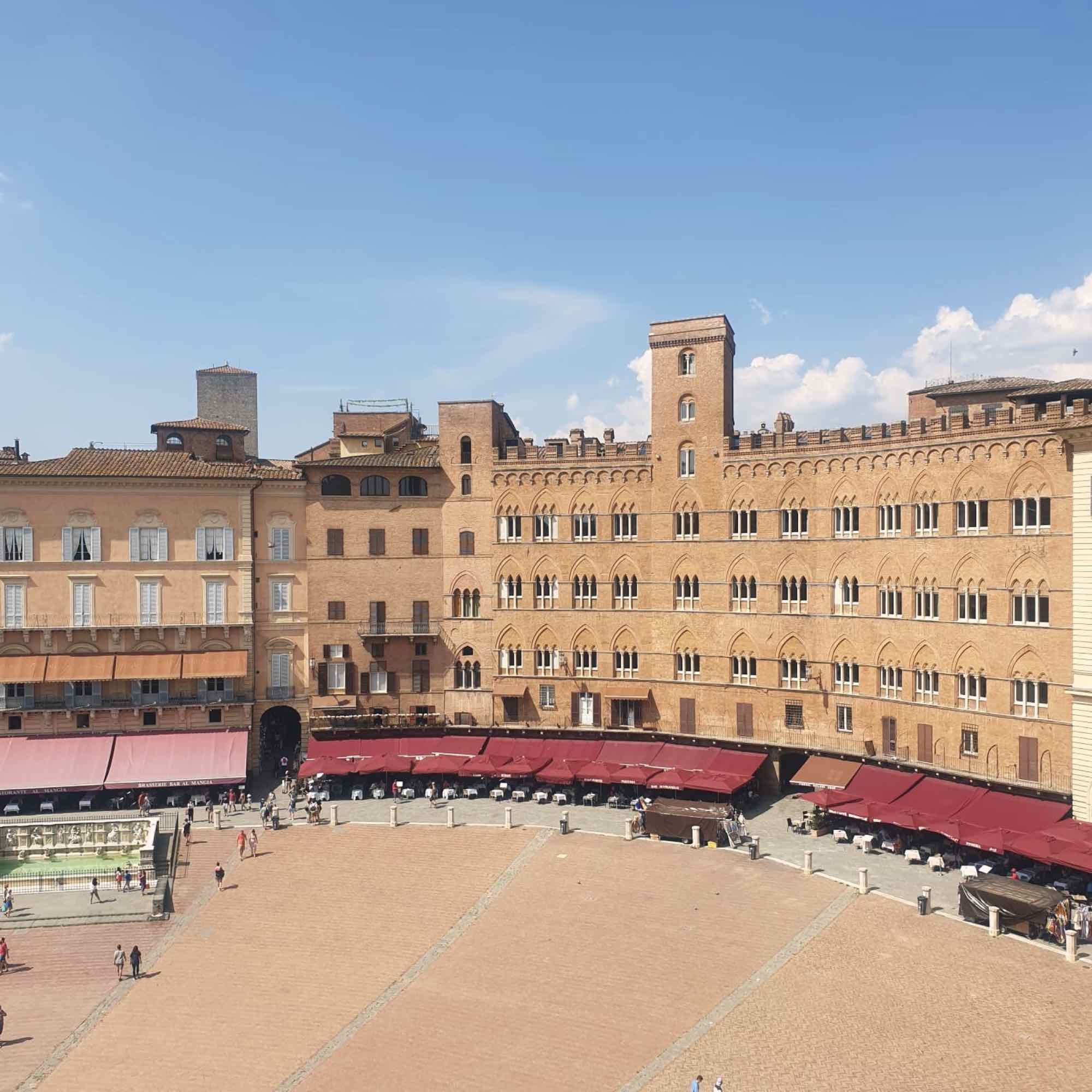
Florence gets the headlines. Siena gets the people who come back. An hour or so to the south, this hilltop city of brick and terracotta moves at a gentler pace, and a well-planned Siena itinerary leaves room for the things that matter here: long lunches, slow evenings and the sense of a city that still belongs to the people who live in it.
Two days is the sweet spot. Enough to see the great sights without rushing, and enough to notice the quieter rituals that make Siena so easy to love. This is how we would spend them.
Why Siena, and not Florence?
The question of Siena or Florence comes up in almost every Tuscan trip we plan, and the honest answer is that they are very different cities. Florence is the Renaissance at full volume: the Uffizi, the David, the Duomo, and the crowds that come with them. Siena is Gothic, medieval and altogether more intimate. Its historic centre is a UNESCO World Heritage Site, but it feels lived in rather than preserved.
The streets are steep and narrow, and they curve so often that you rarely see more than a few dozen metres ahead. Cars are largely kept out of the centre. In the evening, when the day visitors have gone, the city settles into itself, and that is when we think it is at its best. For many of our guests, Siena is where Tuscany finally slows down.
A two-day Siena itinerary
Day 1
The Campo and the civic heart
- Morning coffee on Piazza del Campo, before the square fills
- Climb the Torre del Mangia for the view over the rooftops
- The frescoed halls of the Palazzo Pubblico
- A long lunch in a trattoria off the Campo
- The evening passeggiata along Banchi di Sopra
Day 2
The cathedral and the contrade
- The Duomo and the Piccolomini Library, early
- Santa Maria della Scala, directly opposite
- An afternoon wandering the contrade
- Aperitivo as the light turns gold
Day 1: the Campo, the tower and a very long lunch
Begin where every Sienese day begins, in Piazza del Campo. It is one of the great public spaces of Europe, a sloping, shell-shaped piazza that tilts gently down towards the Palazzo Pubblico, its brick paving divided into nine sections. Arrive early, take a coffee at one of the cafés around the rim, and watch the square wake up. At the top end sits the Fonte Gaia, the city’s marble fountain, where pigeons and children compete for the water.
Then climb. The Torre del Mangia rises from the side of the Palazzo Pubblico, and the climb is roughly 400 steps, some of them tight and steep. The reward is the whole of Siena laid out below you: the Campo like an open fan, the black and white bands of the cathedral, and beyond the walls, the soft green ridges of the Tuscan hills. Numbers on the tower are usually limited, so it is worth going early or booking ahead.
Back on the ground, spend an hour inside the Palazzo Pubblico itself, still the city hall, whose painted rooms tell the story of medieval Siena at the height of its power. Then lunch, and take your time over it. A bowl of pici, a carafe of Chianti, and nowhere to be until the evening.
As the afternoon cools, join the passeggiata. The Sienese walk the main streets in the early evening, greeting friends and stopping for a glass of something, and there is no better way to feel the rhythm of the place.
Day 2: the Duomo, the hospital and the city’s seventeen districts
Go to the Duomo first thing. Its striped marble, inside and out, is unlike anything else in Italy, and the floor is a vast inlaid picture book that took generations to complete. Off the nave, the Piccolomini Library is a small room of almost unreal colour, its frescoes still bright after five centuries.
Opposite the cathedral, Santa Maria della Scala was for centuries one of Europe’s great hospitals and is now a museum. It is often quieter than the Duomo, and its frescoed halls and deep vaulted lower levels are well worth the time.
Spend the afternoon without a plan. Walk downhill, then uphill, and let the streets decide. You will notice small changes as you go: a new set of flags on the walls, a different emblem on a fountain. You are crossing from one contrada into the next. Finish with an aperitivo as the brick turns honey-coloured in the late sun.
The contrade and the Palio di Siena
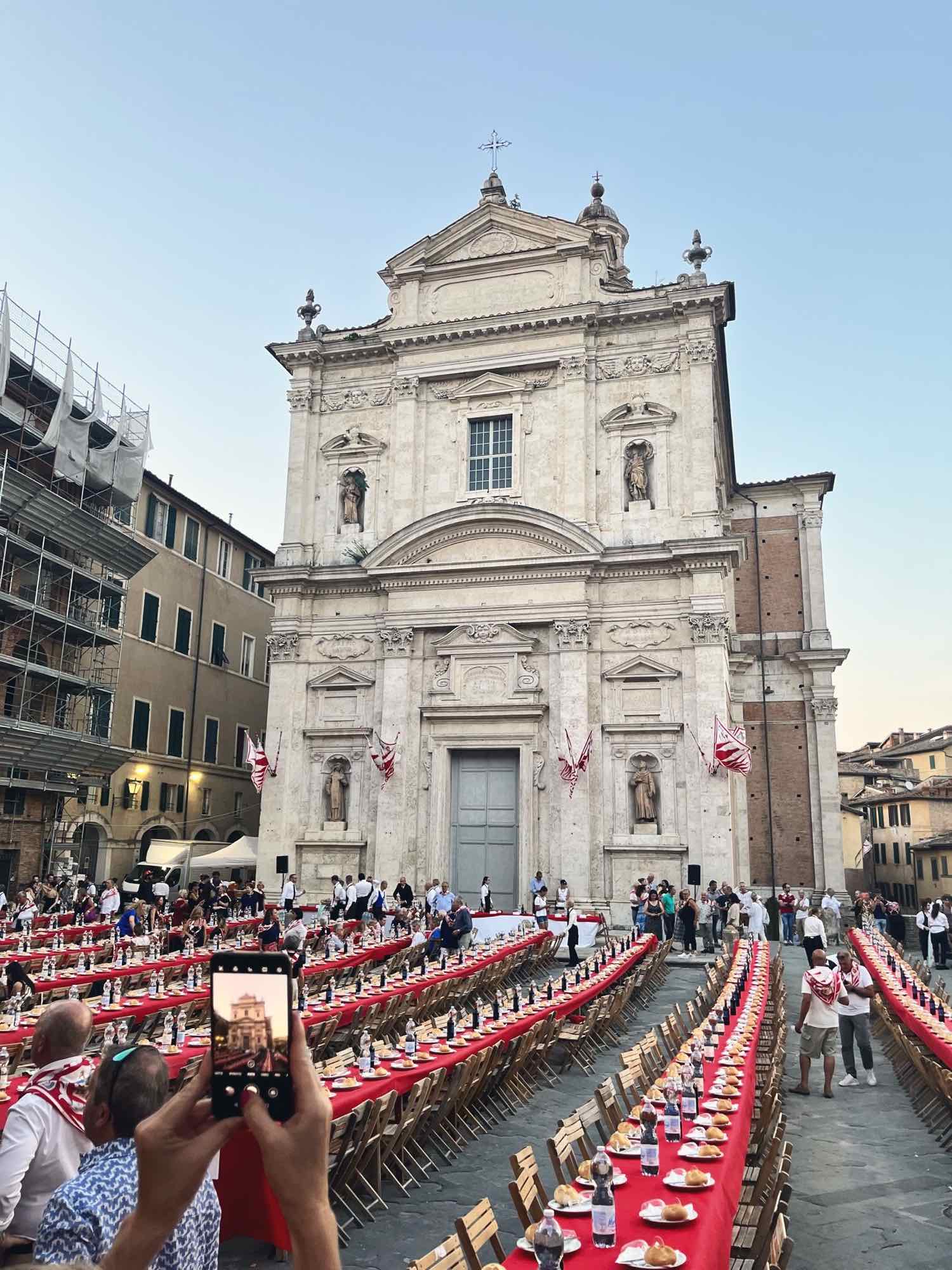
To understand Siena, you need to understand the contrade. The city is divided into 17 of them, historic districts each with its own church, fountain, colours and emblem, and the loyalty they inspire is lifelong. Many Sienese are baptised into their contrada, and they still celebrate its feast days.
All of that devotion comes to a head at the Palio di Siena, the bareback horse race run around the Campo on 2 July and 16 August. The race itself is over in about a minute and a half. The build-up lasts for days. Flags hang from every window, and in the evenings the contrade lay long tables down the middle of their streets for dinners that run late into the night.
The Palio is thrilling, crowded and intensely local. If you want to see it, plan well in advance: the best viewpoints over the Campo are limited and much sought after, and the right hotel matters more than ever during those weeks. Read our first-hand guide to the Palio di Siena, from the contrada dinner to a balcony over the race.
What to eat in Siena
Sienese cooking is earthy and generous, built on good bread, olive oil and whatever the hills provide. Look out for:
- Pici. Thick, hand-rolled pasta, often served with a garlicky tomato sauce or a slow ragù.
- Ribollita. The Tuscan bread and vegetable soup, best in the cooler months.
- Panforte. A dense, spiced cake of nuts and candied fruit that Siena has been making since the Middle Ages.
- Ricciarelli. Soft almond biscuits dusted with icing sugar, perfect with a coffee or a glass of vin santo.
Wine is never far away. Chianti is on the doorstep, and Brunello di Montalcino, one of Italy’s great reds, is made less than an hour to the south.
Where to stay in Siena
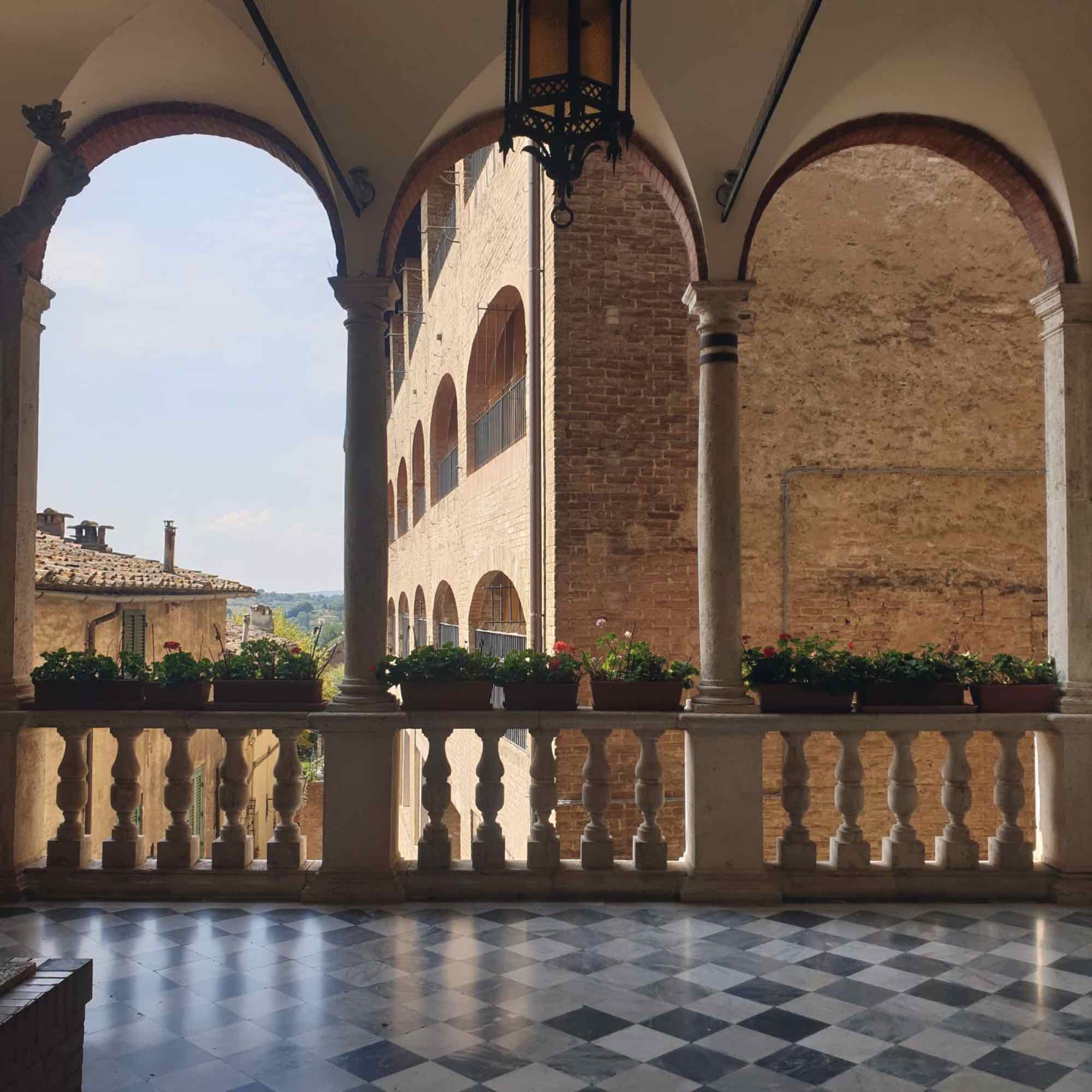
There are two ways to stay in Siena, and both have their charms. The first is inside the walls, in a converted palazzo with high ceilings, quiet courtyards and the Campo a few minutes’ walk away. This is the choice for those who want to step out each evening into the passeggiata and wander home after dinner.
The second is out in the hills, in a country estate or private villa among the vineyards and olive groves. Here the trade is space and silence: a pool, long views and dinner on the terrace, with the city a short drive away. Many of our guests split their stay, a couple of nights in the city followed by a few in the countryside.
A day beyond the walls
If you can add a third day, use it to explore. To the north lies Chianti, with its wine estates and hilltop villages. To the south, Montalcino sits above the vineyards that produce Brunello, and beyond it the Val d’Orcia unrolls in the cypress-lined valleys that appear on so many postcards of Tuscany. With a driver, all of this is an easy day out, with a long lunch in the middle.
And if Tuscany is only the start, it pairs beautifully with a week by the sea. Extend to the coast, or to the islands: our guide to Sicily or Sardinia may help you choose.
Getting to Siena
From Florence, Siena is usually around an hour by car, depending on traffic, and there are regular buses and trains between the two. The nearest major airports are Florence and Pisa. Florence is usually a little over an hour away by road, Pisa a little further. We generally recommend a private transfer: it is the simplest way to arrive, and a good driver will take you the scenic route.
We plan Tuscan journeys around exactly these moments: the right room, the right table, and the time to enjoy both. Tell us how you like to travel, and we will take care of the rest.
Frequently asked questions
Is 2 days in Siena enough?
Two days is enough to see Siena’s main sights, including the Campo, the Torre del Mangia and the Duomo, at an unhurried pace. Add a third day if you want to explore Chianti, Montalcino or the Val d’Orcia.
Should I visit Siena or Florence?
Florence is the place for Renaissance art and grand museums, while Siena is smaller, quieter and more medieval in feel. Many travellers enjoy both, and they are only around an hour apart by car.
When is the Palio di Siena?
The Palio is run in Piazza del Campo twice a year, on 2 July and 16 August. The days beforehand are filled with trial races, processions and contrada dinners in the streets.
Where is the best place to stay in Siena?
Stay inside the walls, in a palazzo hotel near the Campo, if you want to walk everywhere and enjoy the city in the evenings. For space and views, choose a country estate or villa in the surrounding hills.
How do you get from Florence to Siena?
By car, Siena is usually around an hour from Florence. There are also regular buses and trains, or you can arrange a private transfer.