Journal · Italy · Events
The Palio di Siena: ninety seconds, seven centuries
Ten horses, three laps of the Campo and a city that holds its breath. We spent the August Palio with the Contrada della Giraffa, from the dinner in its streets to a balcony above the race. This is what it is really like, and how to experience it properly.
 Thomas Woods, Founder··7 min read
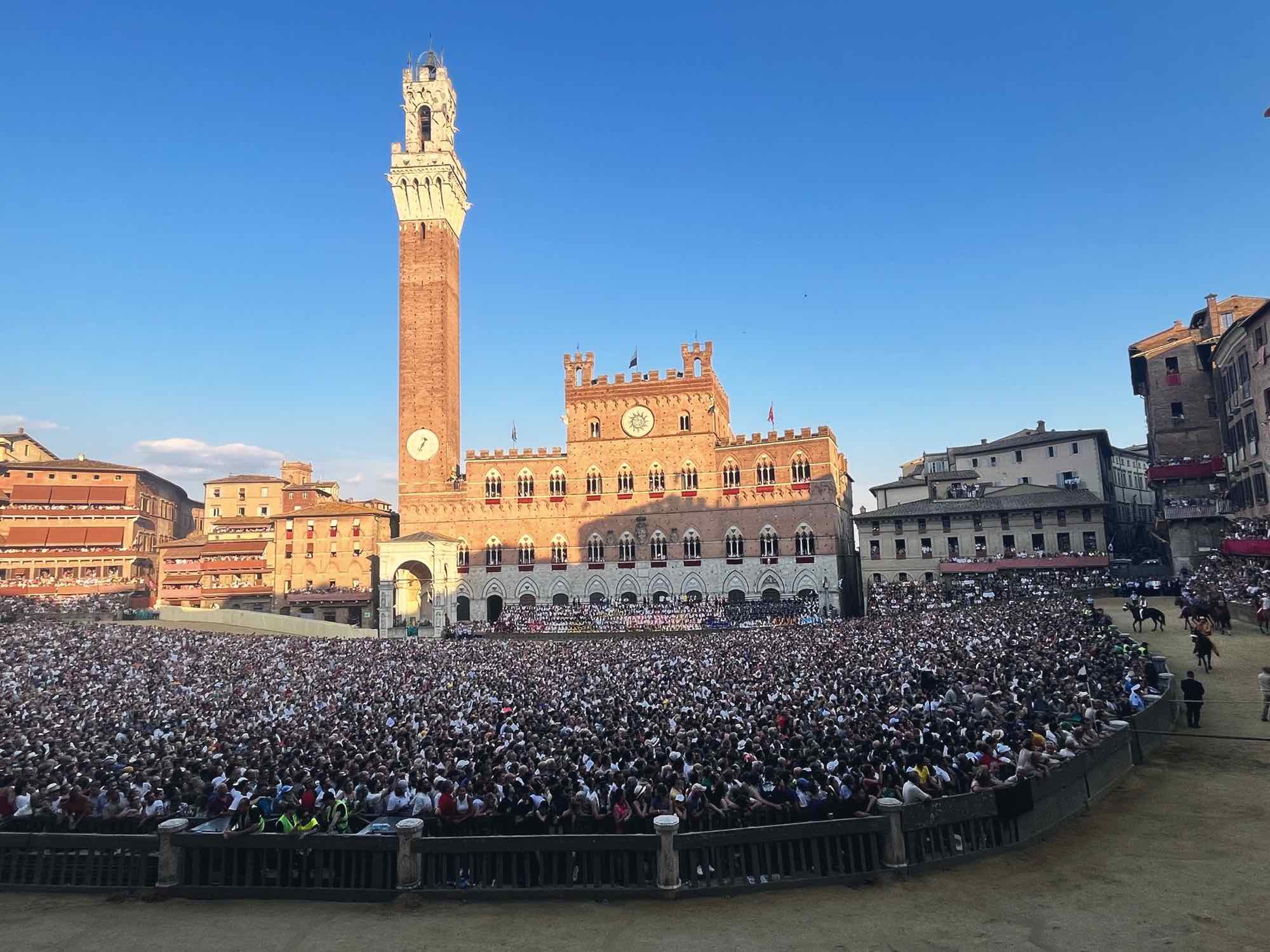
You hear the Palio di Siena before you see it. A low roar rolls up from the Campo, thousands of voices chanting the songs of their contrada, and then, as the horses come round, something you feel more than hear: a deep, drumming vibration through the stone, through the balcony rail, through your chest. Ninety seconds later it is over, and a city of medieval brick and terracotta erupts.
We were in Siena for the August Palio in 2023, as guests of the Contrada della Giraffa. We ate at its long tables in the streets the night before the race, and watched from the Giraffa’s balcony above one of the restaurants on the Campo. We have been to a great many events in Europe. Nothing comes close to this.
What is the Palio di Siena?
The Palio is a horse race, but calling it that is a little like calling Christmas a meal. Run in the Piazza del Campo every 2 July and 16 August, it is one of the oldest horse races in the world, with roots that go back to the Middle Ages. The prize is not money. It is the palio itself, a hand-painted silk banner, and with it a year of bragging rights that no Sienese ever forgets.
The city is divided into seventeen contrade, historic neighbourhoods with their own church, fountain, museum, colours and animal emblem: the Goose, the Owl, the Unicorn, the Wave, the Giraffe. You are born into your contrada, baptised in its fountain, married in its church. Ten of them race in each Palio, and the rivalries between them are ancient, fierce and conducted with tremendous style.
Four days that build to a single afternoon
The race lasts a minute and a half. The Palio lasts four days. It begins with the tratta, when the horses are assigned to the contrade by lot, a moment greeted with either joy or despair in the packed piazza. Then come the trial races, morning and evening, as the jockeys test the track and the city grows steadily louder.
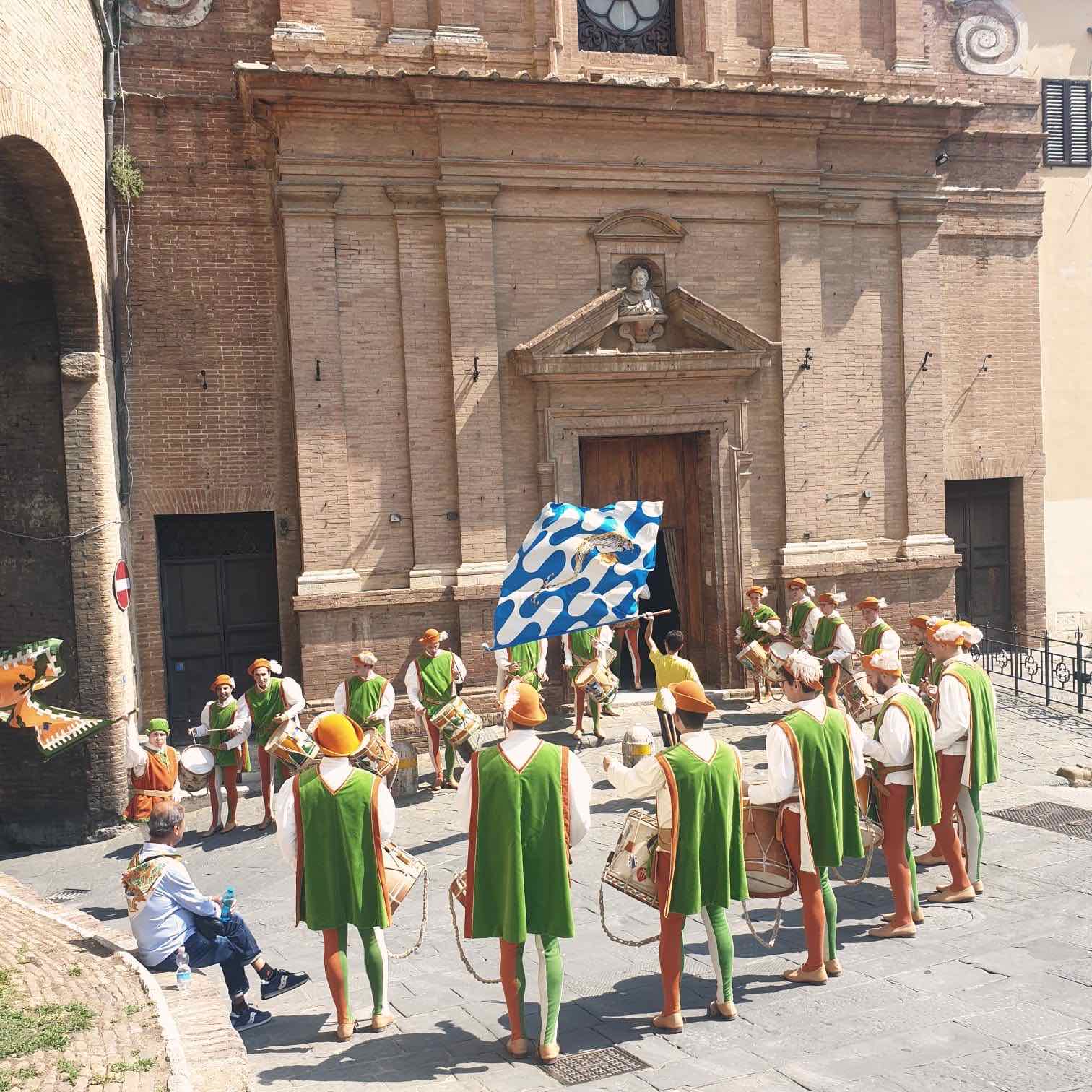
On the afternoon of the race, each horse is led into its contrada’s church to be blessed at the altar. Then the corteo storico begins: hundreds of figures in medieval costume, drummers and flag-throwers who send their banners spinning high above the crowd, processing slowly around the Campo as the light turns gold. It is pageantry of the most serious kind, performed by people who have been rehearsing it, in one way or another, all their lives.
The contrada dinner: the night before the race
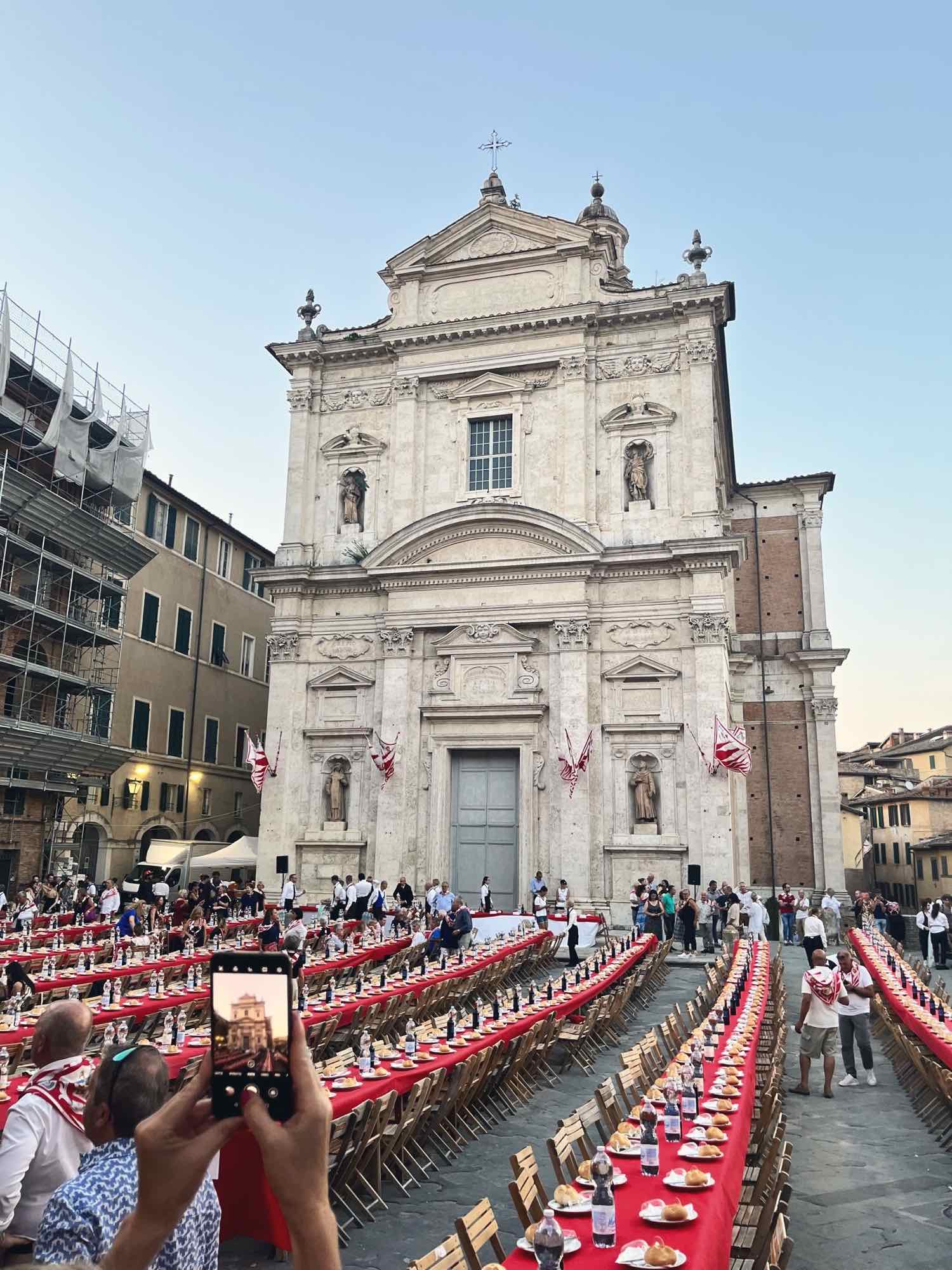
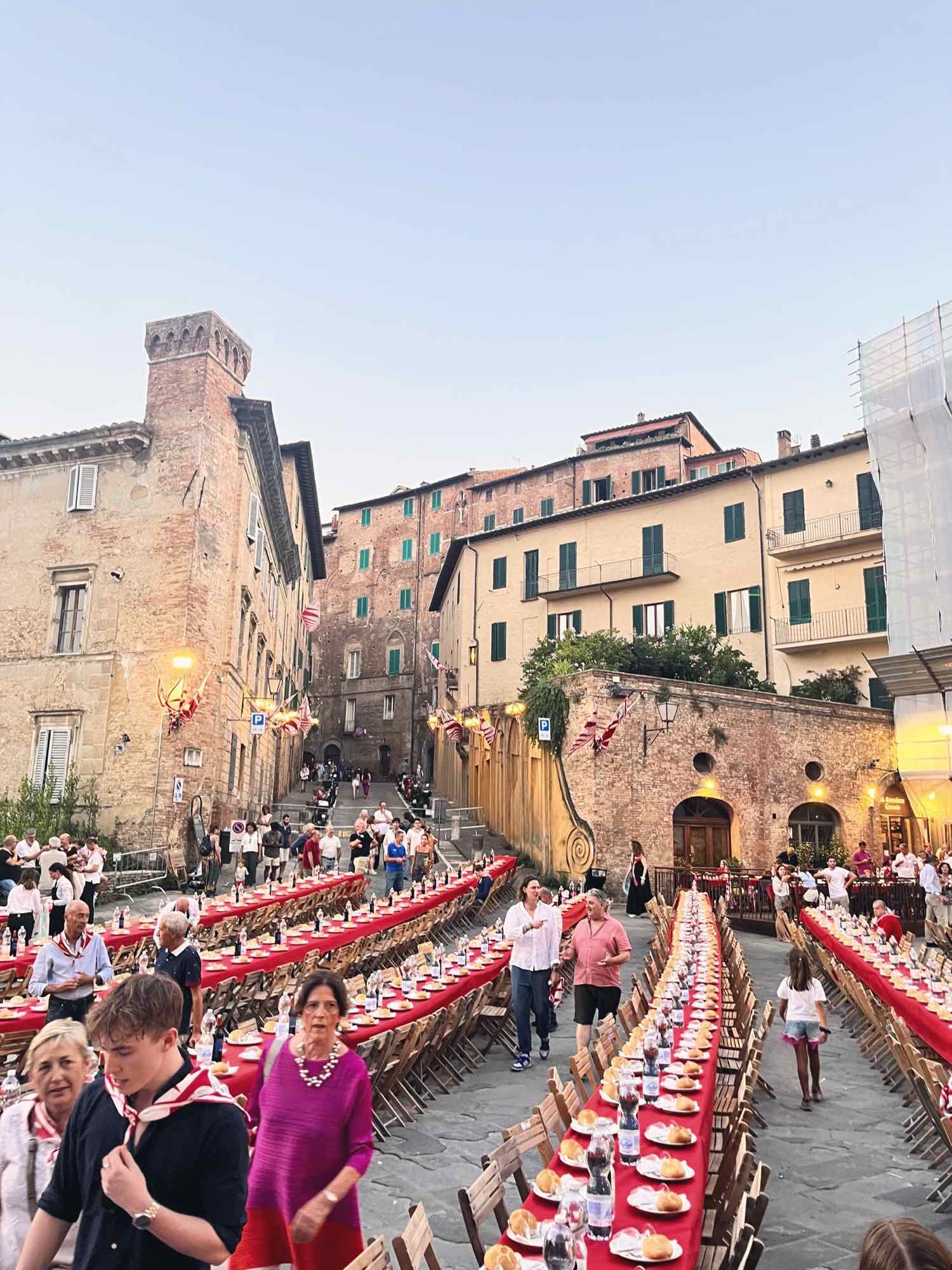
If the race is the climax, the dinner is the heart. On the evening before the Palio, after the final trial, every contrada lays long tables through its streets and sits down together, often in their hundreds. It is called the cena della prova generale, and it is one of the most extraordinary evenings you can spend anywhere in Italy.
We sat with the Giraffa among families, grandparents and children in red and white scarves. The food was generous and the wine kept coming, but the real feast was the atmosphere. The contrada songs started at one end of the street and rolled all the way down the tables. There is hope at these tables, and nerves, and a sense of belonging so strong that even a guest feels part of it by the end of the night.
The race itself
By late afternoon on race day the centre of the Campo is packed solid, tens of thousands of people standing shoulder to shoulder inside the track. Around the edge, every window and balcony is full. The horses enter, the ten jockeys line up between two ropes, and the start, the mossa, can take an agonising age as rivals jostle for position and the crowd’s nerves fray.
Then the rope drops and the Campo explodes. Ten horses, ridden bareback, tear around the sloping shell-shaped piazza three times, flying into the tight corners where mattresses are lashed to the walls. From our balcony the noise was overwhelming, a single, continuous roar of chanting and screaming, and beneath it the thunder of hooves, so close and so heavy that we could feel it shaking the building beneath our feet. Riders fall. Horses carry on. A horse can even win without its jockey. And then, around ninety seconds after it began, it is over.
What happens next is the part no photograph prepares you for. The winning contrada pours onto the track in tears and ecstasy, the banner is seized, and the celebrations spill out of the Campo and through the city.
After the race: a city alive with tradition
We walked back through streets packed with passion and pure electricity. Drums echoing off the palazzi, flags waving from every corner, strangers embracing, and on some faces, real heartbreak. It struck us then that this is not a show put on for visitors. It is hundreds of years of tradition and culture, still completely alive, and for a few days each summer, Siena lets you share in it.
How to watch the Palio
There are two ways to see the race, and they could hardly be more different.
| In the centre of the Campo | From a balcony or stand | |
|---|---|---|
| Cost | Free | Seats are sold privately and in advance, and they are in high demand |
| Experience | Raw and intense, in the heart of the crowd | The whole track in view, with the noise rising up to you |
| Comfort | Hours standing in the summer heat, with no easy way out once the gates close | Shade, space and a seat |
| Best for | The young and the very determined | Anyone who wants to see the race, and enjoy it |
For our guests, we always recommend a balcony. You see every metre of the track, you feel every lap, and you still have the energy to join the celebrations afterwards.
How we arrange the Palio
Access to the Palio is about relationships, and it is very hard to arrange well on your own. We can take care of the whole experience: a seat at a contrada dinner on the eve of the race, a balcony overlooking the Campo for the Palio itself, and a beautiful place to stay in or around Siena, with time either side to explore the city and the Tuscan hills.
Both Palios book up early, and the best balconies go months in advance, so if you are thinking of next summer, now is the time to talk to us. Pair it with our two days in Siena, and you have one of the great journeys in Italy.
Tell us which Palio you would like to see, and we will take care of everything else. Start planning your Palio.
Frequently asked questions
When is the Palio di Siena?
The Palio is run twice a year in Piazza del Campo, on 2 July and 16 August. The festivities begin around four days earlier with the drawing of the horses and the trial races.
How long does the Palio race last?
The race itself is three laps of the Campo and usually lasts around ninety seconds, although the start between the ropes can take much longer.
Can visitors attend a contrada dinner?
The dinners are for the contrada and its guests, so the best way to attend is through someone with connections in Siena. We can arrange a seat at a contrada dinner as part of a Palio journey.
Is it free to watch the Palio?
Standing in the centre of the Campo is free, but it means hours in the heat and crowds. Seats on balconies and stands around the piazza are sold privately and in advance.
What is the best way to experience the Palio di Siena?
We recommend a contrada dinner on the night before the race, then a balcony seat over the Campo for the Palio itself, with a few days in Siena either side.